
ANECDOTE
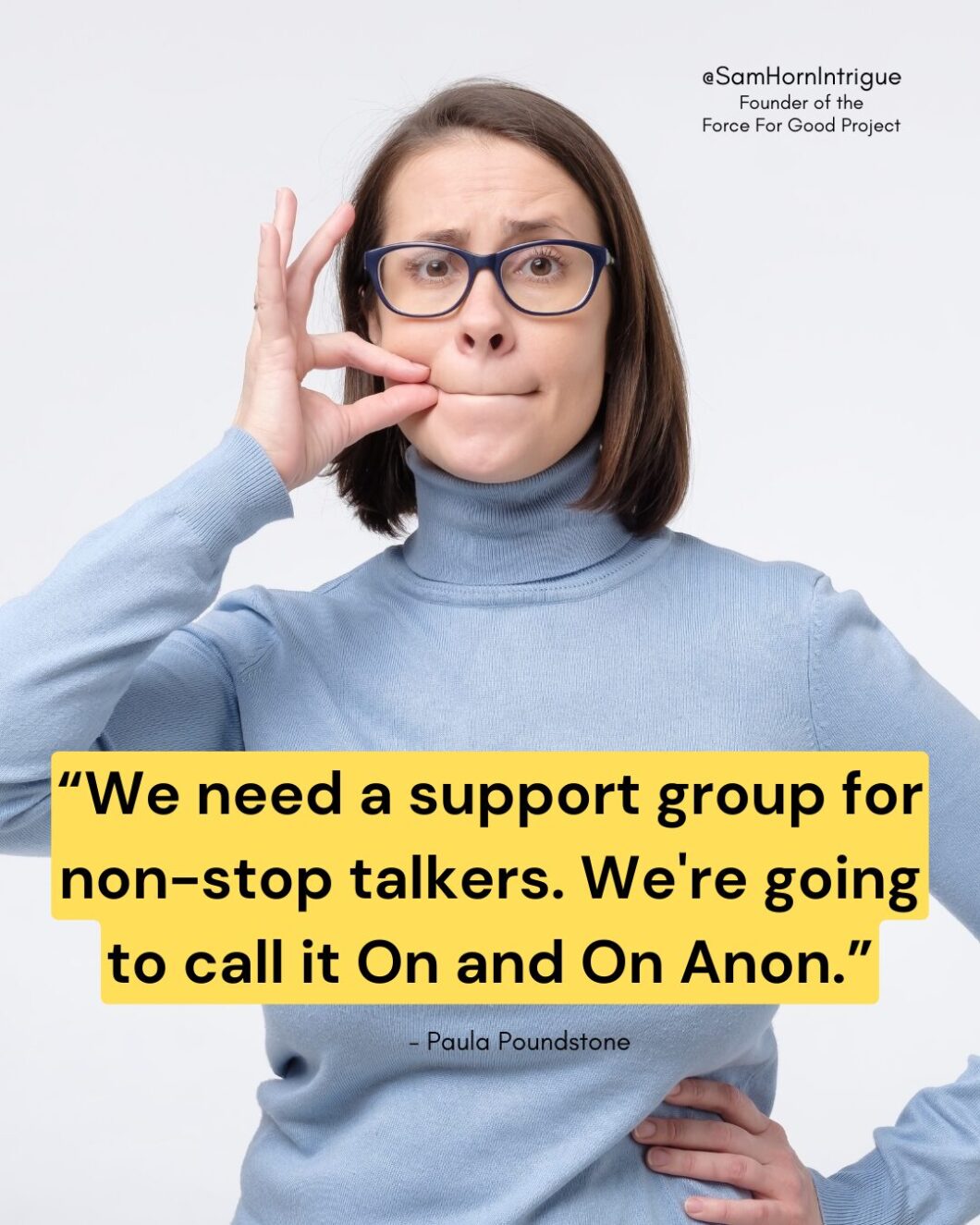
A tech company once hired me to work with one of their managers. They said, “Rick is brilliant, but he doesn’t know when to stop talking. People groan when they see him coming because they know he’ll talk their ear off.”
An hour into our session, I understood why Rick was all over the map.
He was verbally undisciplined. He said whatever came to mind without asking himself if it was relevant, on point, on purpose, or whether people wanted or needed to hear it.
Since Rick was an engineer, I knew he’d respect numbers, so I suggested he apply metrics to his interactions.
“From now on, give yourself a number for every communication. For example, ‘I will never speak for more than three minutes at a time.’”
He frowned. “But what if what I have to say takes longer than that?”
“Then interrupt yourself and ask, ‘Any questions?’ ‘Want more details?’ or ‘What do you think?’”
That gives people a chance to contribute, so you’re creating a two-way dialogue instead of a one-way monologue.
Just then, thunder rumbled in the distance, and my Jack Russell, who was terrified of storms, began frantically pacing.
I asked Rick, “Can we take a quick break so I can put a ThunderShirt on JR?”
“What’s a ThunderShirt?”
“It’s a wrap you put on dogs that calms them down. It makes them feel safe and contained instead of having crazy, out-of-control energy.”
Rick started laughing.
“Sam, that’s what you’re suggesting I do. You’re saying I should put a ThunderShirt on my communication so it’s not out of control and I’m driving people crazy.”
Exactly! 🙂
In the absence of a measurable time limit, it’s tempting to go on and on.
From now on, put a ThunderShirt on what you say.
Talk for a minute, or two, or three, and then put a sock in it. No one will ever be angry at you for making a long story short.
Plus, people are more likely to take your calls and get value from your meetings when they trust you will keep them productive, purposeful, and on point.
ACTION
Where are you talking longer than needed? This week, try catching yourself mid-sentence and ask, “Any questions?” or “What do you think?”
The next time you’re tempted to over-explain, stop and ask yourself:
Is this relevant?
Is this on point?
Is this on purpose?
Do they want or need to hear this?
Then put a ThunderShirt on what you say. Keep it brief so people don’t give you grief.
P.S. Want help refining your communications? See how we can work together here.