
ANECDOTE
I had the privilege of managing programs for tennis champion Rod Laver on Hilton Head Island, SC, right out of college.
We finished one of our national tennis camps, and as a reward for my hard work, Rocket asked if I’d like to hit for a bit.
Would I?! Rocket made me work for every point, running me from side to side. Finally, he hit a weak lob, and I had my chance. If I just put this overhead away, I’d take a point off Rocket.
In my eagerness, I committed the cardinal sin of overheads. I looked where I was going to place the ball instead of keeping my eyes on the ball.
Well, I didn’t just mishit it, I took a mighty whiff and missed it altogether.
I lost my cool and started shoulding all over myself, “I should have kept my head up. I should have kept my eyes on the ball. I know better than that…”
Rocket, known for his sportsmanship, let me vent for a moment, then beckoned me over to the net and said, “Sam, champions never use the word should. The second they make a mistake, they’re already focused on how to do it right next time.”
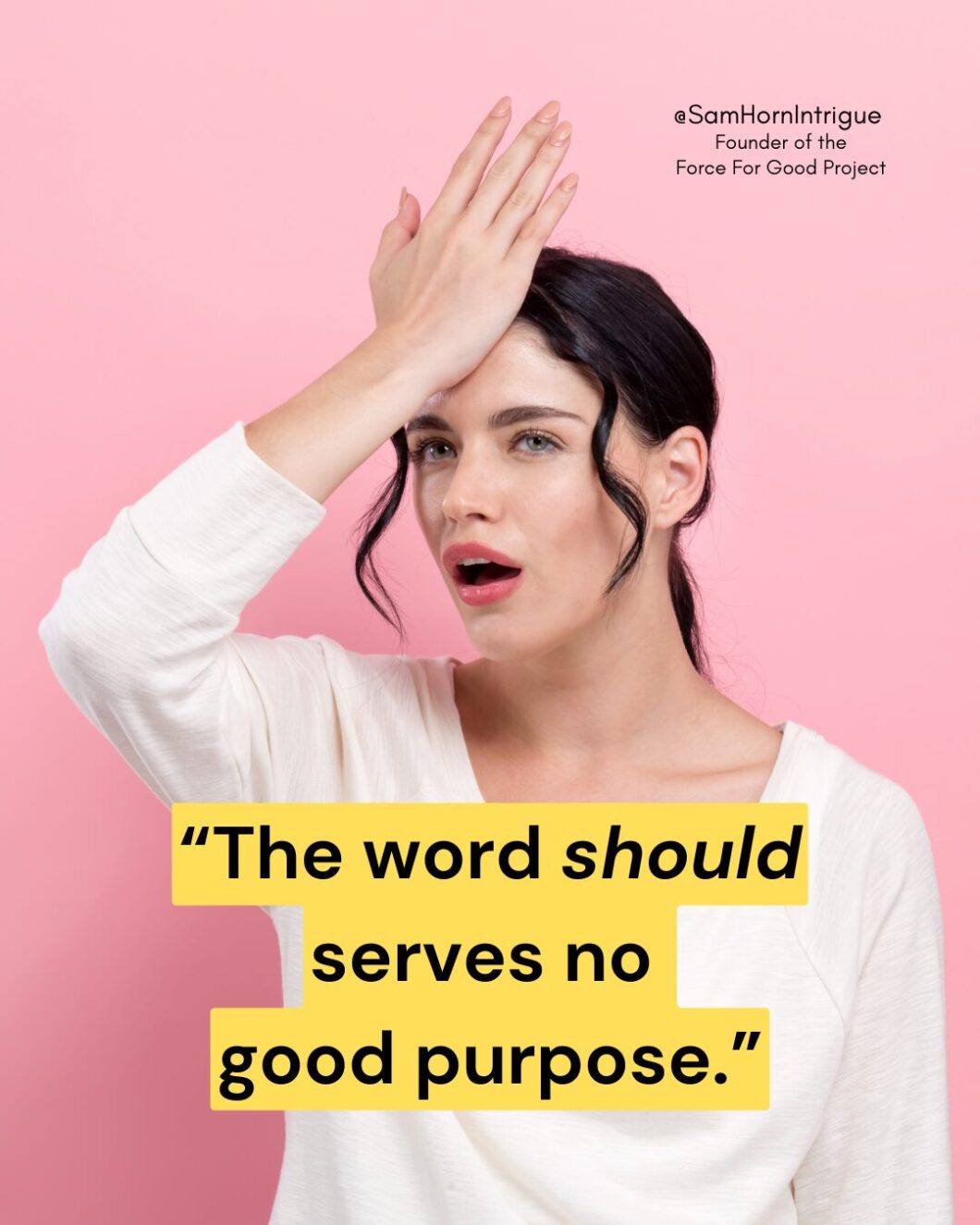
Thank you, Rocket, for teaching me that the word should serves no good purpose.
If we make a mistake, it’s more helpful to use words like “Next time, in the future, or from now on” so we’re shaping our performance instead of shaming it.
Being a FORCE FOR GOOD leader means turning mistakes into stepping stones to success by suggesting instead of shoulding. Everyone will thank you for it.
ACTION
Think of a recent mistake you made…
Did you shame it with “should,” or shape it with “next time”?
How could you reframe that mistake into a stepping stone to success?
P.S. Want to share skills like this with your employees or audience? Inquire about speaking here.